
Water plays a central role in almost every industrial operation. From manufacturing and food processing to hospitality, healthcare and commercial facilities, industries need a dependable supply of good-quality water to keep their processes running smoothly. In Gurgaon, now widely known as Gurugram, the demand for reliable water treatment has grown along with rapid industrial and commercial development.
However, getting suitable-quality water is not always easy. Groundwater quality can vary from one location to another. Dissolved salts, hardness and other impurities can affect production processes and damage equipment. Over time, untreated or poorly treated water can contribute to scaling, corrosion and higher maintenance costs.
This is where a Commercial RO Plant can make a real difference.
A reverse osmosis system uses pressure to push water through a semi-permeable membrane. The membrane separates many dissolved salts and other contaminants from the treated water. With suitable pretreatment and post-treatment, an RO plant can provide water that meets the requirements of a particular industrial application.
Netsol Water's published Gurgaon commercial RO page describes systems ranging from 100 LPH to 10,000 LPH and mentions both stainless-steel and FRP construction options. Its broader product information also lists RO systems from commercial capacities up to much larger industrial applications.
But choosing the Best Commercial RO Plant Manufacturer in Gurgaon for Industrial Projects is about much more than selecting an RO membrane. The complete system needs to suit the source water, required capacity, water quality and end use.
Why Industries in Gurgaon Need Commercial RO Plants
Gurgaon has developed into a major corporate and industrial centre. Manufacturing units, hotels, hospitals, offices, educational institutions and processing facilities all have different water requirements.
Some industries need treated water for general consumption. Others need it for production or utility operations.
For example, water quality can affect:
Manufacturing processes
Boiler feed systems
Cooling towers
Food and beverage production
Pharmaceutical operations
Cleaning processes
Laboratory applications
Commercial kitchens
General utility requirements
If raw water contains excessive dissolved solids or hardness, it can create operational problems.
Scale may accumulate inside pipelines and heat-transfer equipment. Corrosion can affect metal surfaces. Production quality may also suffer when the water does not meet process requirements.
Therefore, installing the right RO system can help industries maintain a more consistent water supply.
What Is a Commercial RO Plant?
A commercial RO plant is a water purification system designed to treat larger volumes than a typical household RO purifier.
The basic principle remains the same.
Water passes through pretreatment equipment before reaching the RO membrane. High-pressure pumps then provide the pressure required for membrane separation. The membrane allows water to pass while rejecting a significant portion of dissolved salts and other unwanted substances.
The treated stream is called permeate or product water. The concentrated stream is commonly called reject or concentrate.
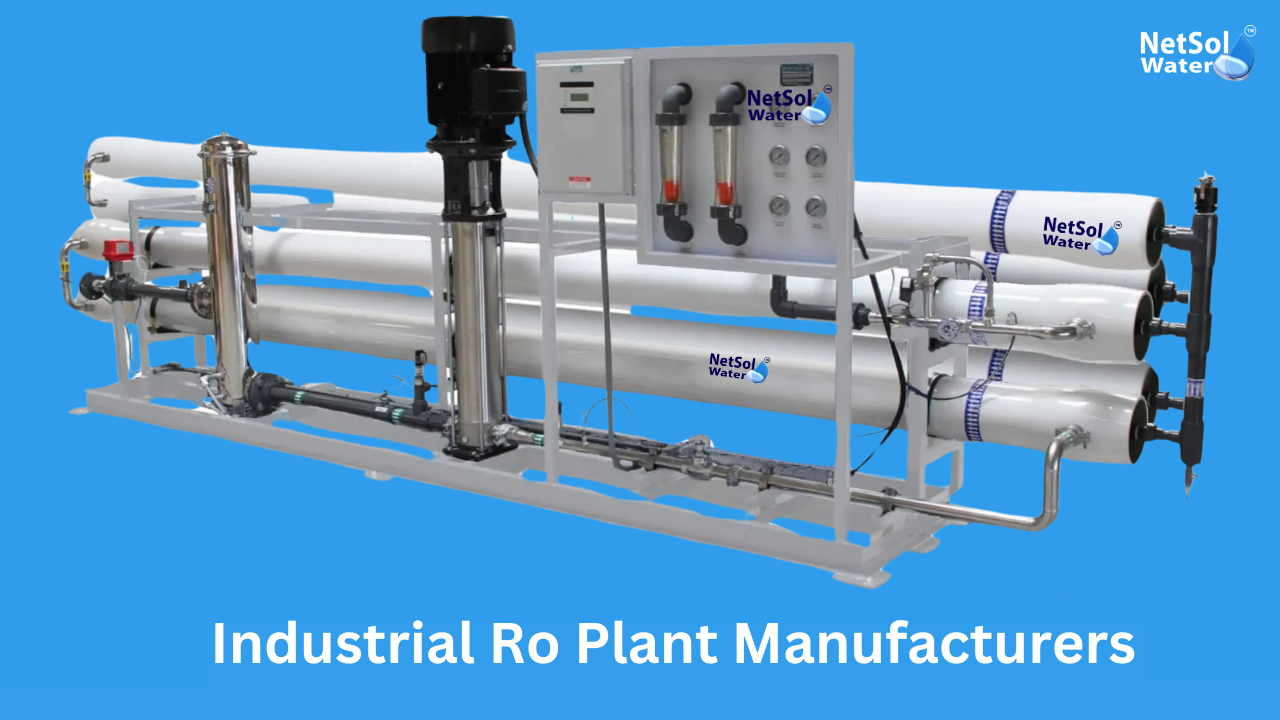
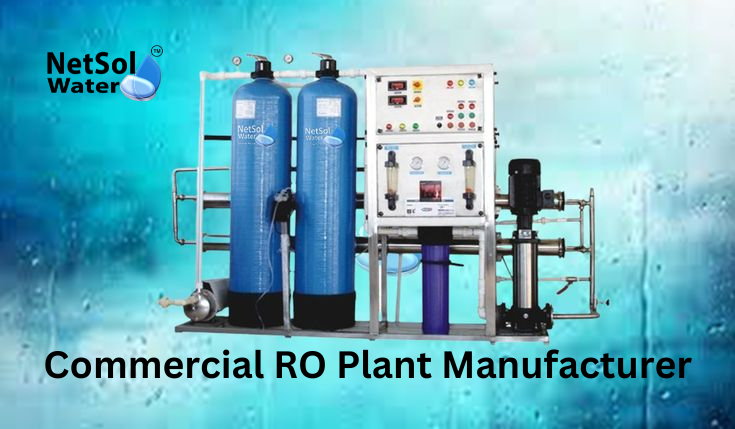
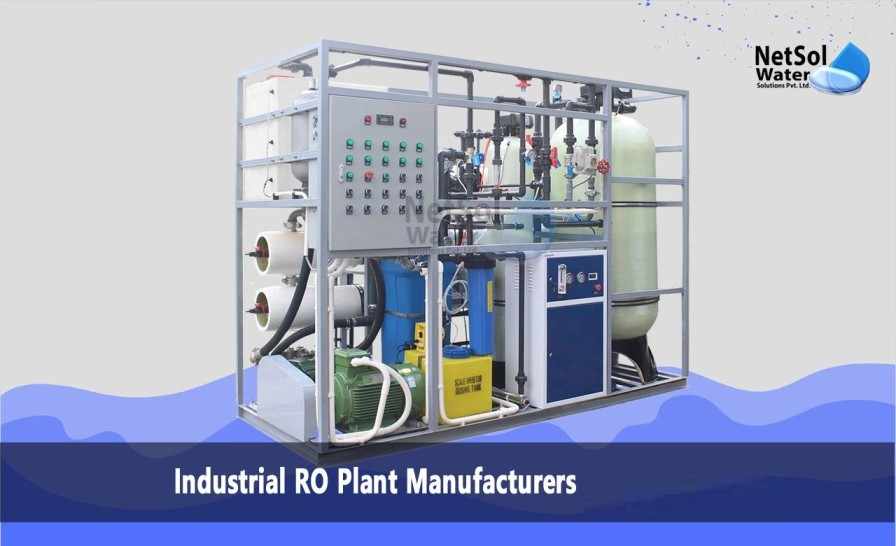
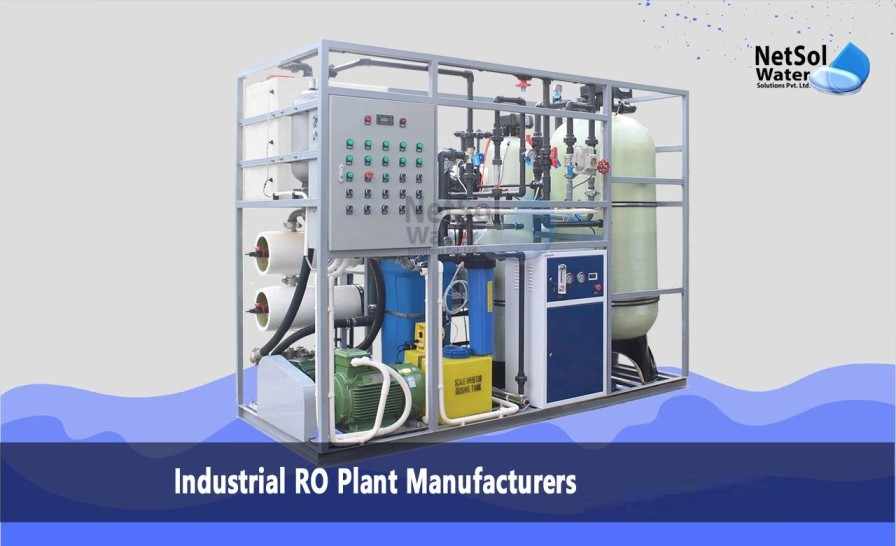
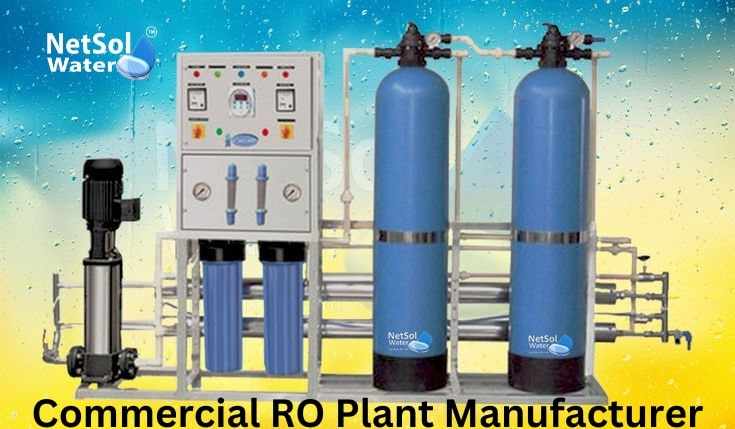
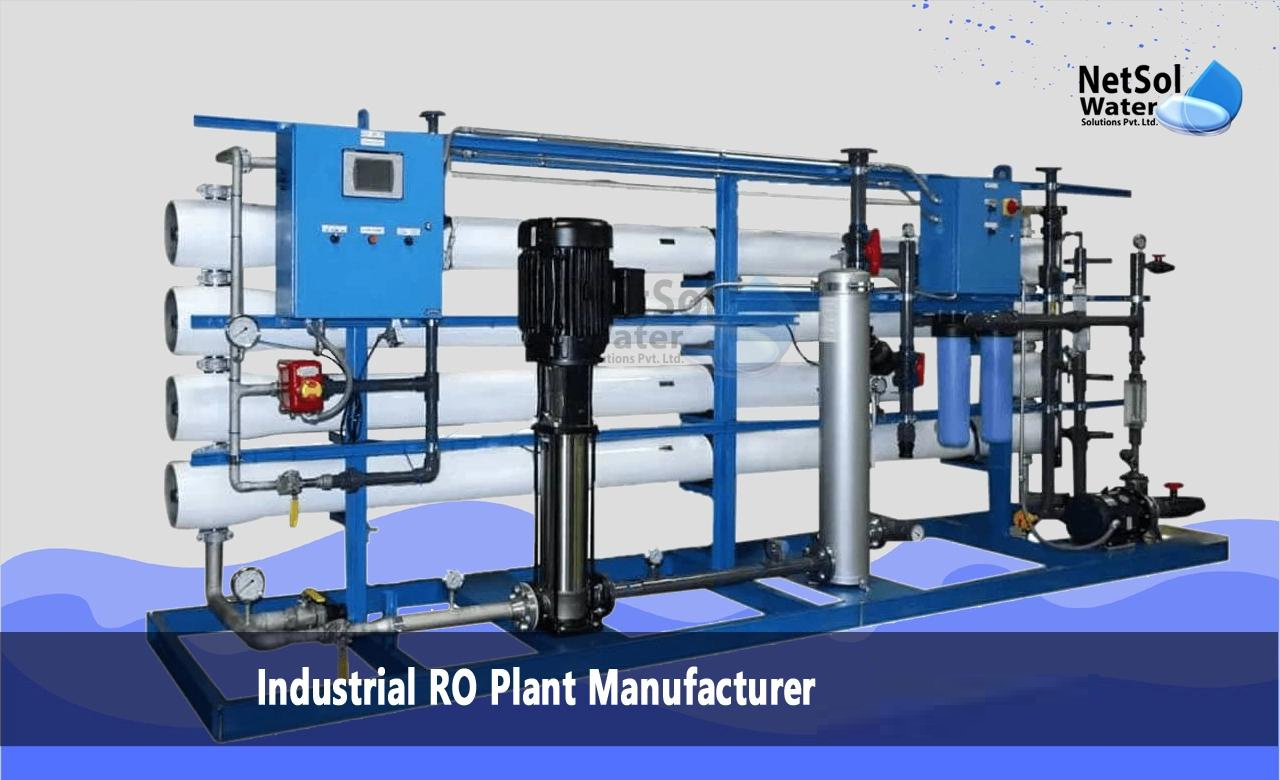
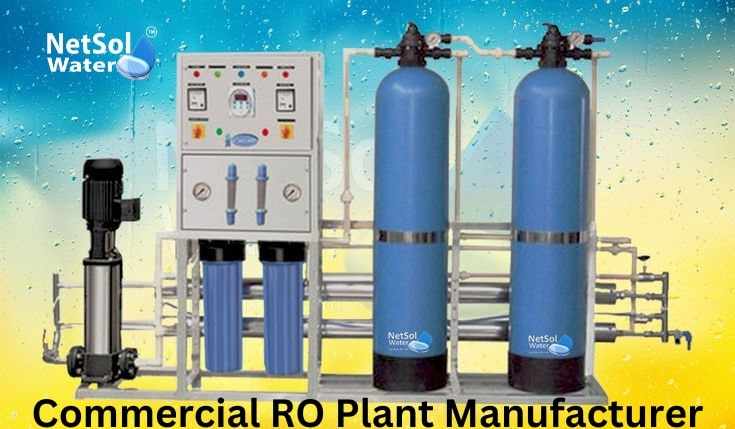
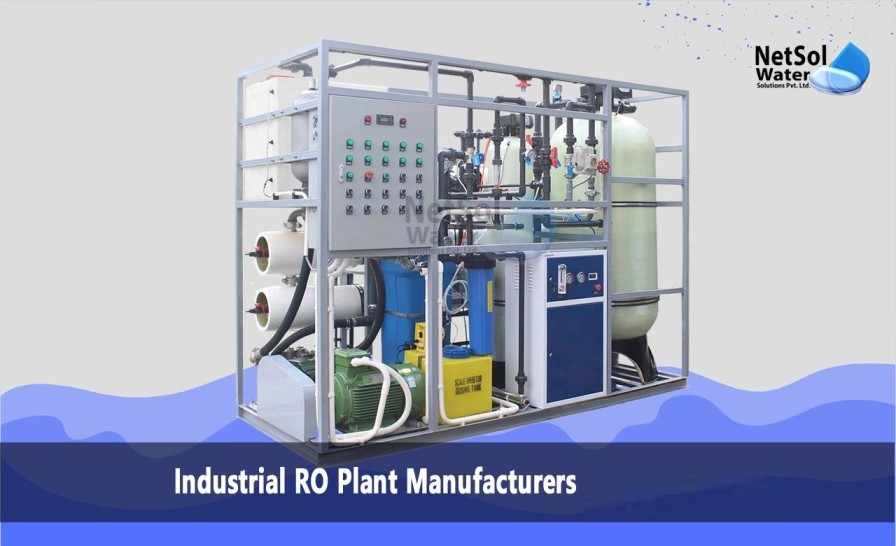
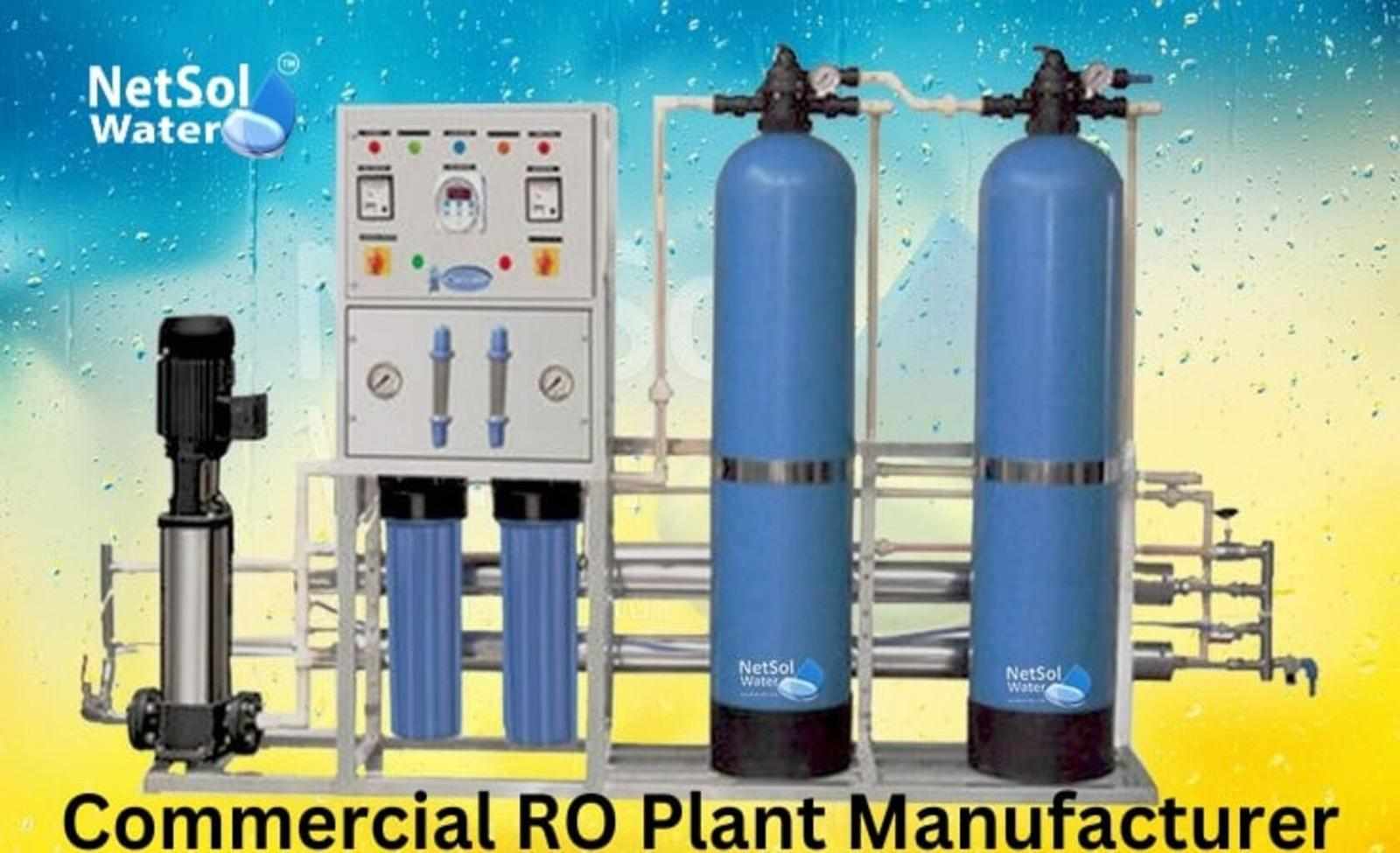
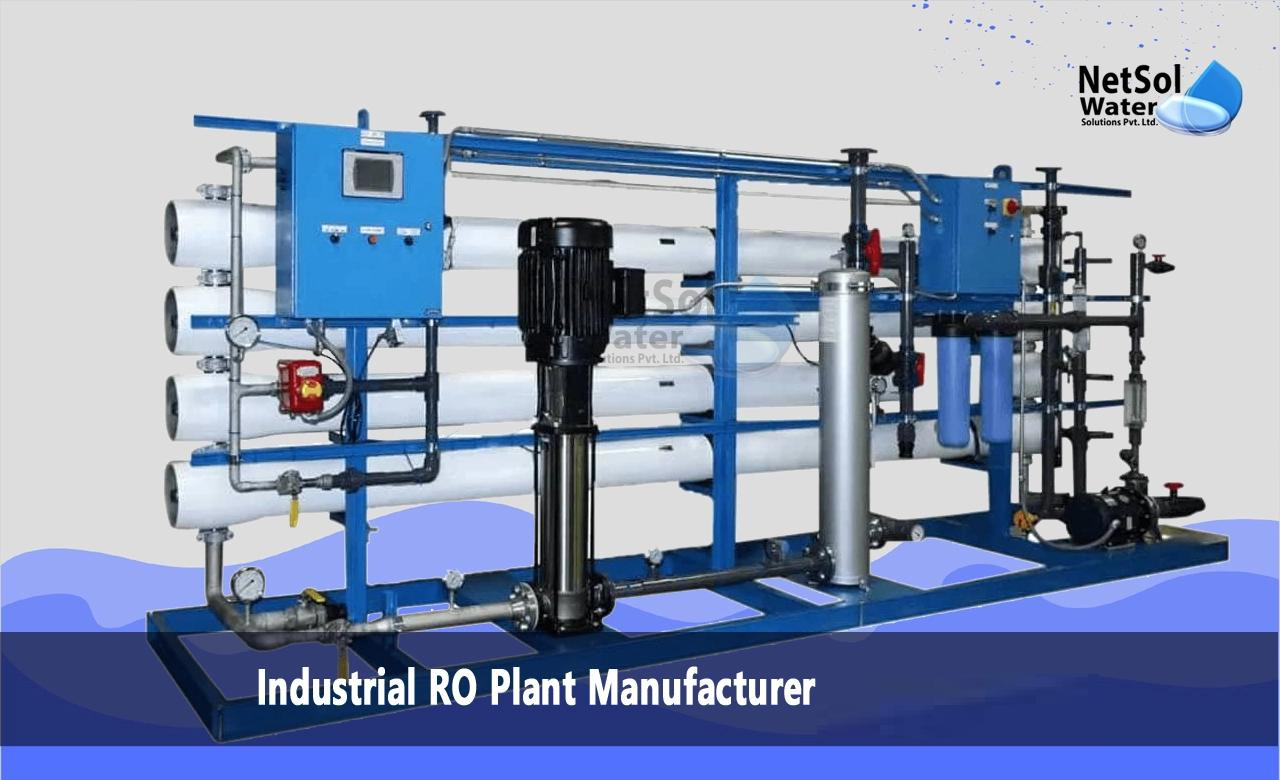
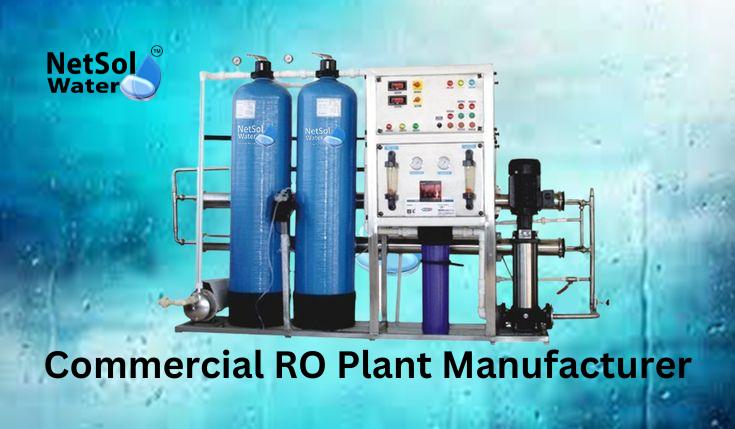
A commercial RO system may include:
Raw water storage
Feed pump
Sand filter
Activated carbon filter
Micron filtration
High-pressure pump
RO membrane housing
RO membranes
Flow meters
Pressure gauges
Control panel
Product-water storage
Reject-water arrangement
Post-treatment equipment where required
The exact configuration should depend on the water analysis and application.
Why Water Testing Should Come Before RO Design
One of the biggest mistakes businesses make is choosing an RO plant based only on capacity.
Capacity matters. However, feed-water quality matters just as much.
Before designing the plant, a manufacturer should ideally study important parameters such as:
TDS
pH
Hardness
Alkalinity
Turbidity
Iron
Silica
Chloride
Sulphate
Microbiological parameters where relevant
Other contaminants based on the source and application
Why does this matter?
Because an RO membrane does not work in isolation.
If the feed water contains high levels of suspended solids or hardness, pretreatment becomes especially important. Without proper pretreatment, the membrane can foul or scale more quickly.
Consequently, good commercial RO plant manufacturers start with water analysis rather than immediately recommending equipment.
Commercial RO Plants for Different Industrial Applications
Not every industry needs the same type of purified water.
Therefore, the RO plant should match the application.
1. RO for Manufacturing Units
Manufacturing facilities may use treated water for production, cleaning and utility operations.
The required water quality depends on the product and manufacturing process. A basic commercial RO system may be sufficient for some applications. Others may require additional treatment after RO.
2. RO for Food and Beverage Industries
Food and beverage facilities need consistent water quality because water can directly influence product quality and hygiene.
The treatment process may include filtration and disinfection along with RO.
The manufacturer should understand the production process before finalizing the system.
3. RO for Pharmaceutical Applications
Pharmaceutical facilities can have demanding water-quality requirements.
RO may form one part of a larger purification system. Depending on the final application, additional technologies such as UV, ultrafiltration, demineralization or polishing may be required.
Therefore, the plant should be designed around the required water specification rather than simply around RO capacity.
4. RO for Hotels and Hospitality
Hotels need water for kitchens, guest services, housekeeping and other utility applications.
A commercial RO system can provide treated water for suitable uses. The required capacity will depend on occupancy and daily water demand.
5. RO for Hospitals
Hospitals use water for drinking, cleaning and various operational activities. Certain applications can require much higher water quality.
A manufacturer should therefore separate general-purpose water treatment from specialized applications before selecting the treatment process.
6. RO for Boiler Feed Water
Boilers can be sensitive to water quality.
Hardness and dissolved minerals can contribute to scaling and operational problems. An appropriate pretreatment and RO system can help produce better-quality feed water.
However, the final boiler-water treatment train should be designed according to the boiler specifications and required feed-water quality.
7. RO for Cooling Towers
Cooling towers also need careful water management.
Dissolved solids can concentrate as water evaporates. If the cycles of concentration are not properly controlled, scaling and corrosion can become concerns.
RO can be used in certain cooling-water strategies to improve feed-water quality and support water reuse.
Key Components of a Commercial RO Plant
A reliable RO system is more than its membrane.
Each component contributes to the overall performance.
1. Pretreatment System
Pretreatment protects the RO membrane.
Sand filters can reduce suspended particles. Activated carbon filters can reduce chlorine and certain organic compounds. Micron filters provide another layer of protection before water reaches the membrane.
The exact arrangement depends on the feed-water quality.
2. High-Pressure Pump
The RO membrane requires pressure to separate water from dissolved substances.
The high-pressure pump provides this operating pressure.
Correct pump selection is important because an undersized pump can affect production while an unnecessarily oversized pump can increase energy consumption.
3. RO Membrane
The membrane performs the main separation process.
Membrane selection should consider feed-water quality, required recovery, operating pressure, temperature and desired product-water quality.
A manufacturer should also plan for membrane cleaning and replacement.
4. Control Panel
The control panel manages the electrical and operational functions of the plant.
Depending on the system, automation can control pumps, valves and other equipment. Larger plants can also incorporate monitoring instruments for easier operation.
5. Storage and Distribution
After treatment, the purified water needs proper storage.
The storage tank and distribution system should be compatible with the water quality and intended use.
How to Select the Right RO Capacity
Capacity is usually expressed in LPH or litres per hour for commercial systems. Larger industrial plants may use higher daily or hourly flow ratings.
Selecting capacity requires a realistic assessment of water demand.
Consider:
Daily water requirement
Peak demand
Plant operating hours
Production schedule
Storage capacity
Future expansion
Recovery requirement
Required product-water quality
For example, if an industrial facility needs water continuously, the RO plant may operate for longer hours. Another facility may prefer a larger system that operates for fewer hours each day.
The manufacturer should evaluate the entire water cycle rather than simply matching the RO capacity to the average daily requirement.
Netsol Water's published information lists commercial RO systems from 50 LPH upward and states that its wider RO range extends to much larger capacities.
Why Pretreatment Is So Important
RO membranes need protection.
Raw water can contain suspended particles, chlorine, hardness and other substances that may affect membrane performance.
Without suitable pretreatment, the membrane can experience:
Scaling
Fouling
Oxidation damage
Reduced flow
Higher pressure requirements
Shorter membrane life
For this reason, pretreatment should never be treated as an optional accessory.
A good manufacturer first studies the water and then develops the pretreatment system around the actual feed-water conditions.
This simple approach can improve membrane performance and reduce maintenance problems.
RO Recovery and Reject Water
Every RO plant produces two streams.
The first is purified product water. The second is reject water that contains a higher concentration of rejected dissolved substances.
Recovery represents the proportion of feed water converted into product water.
For example, if a system receives 1,000 litres of feed water and produces 700 litres of product water, the recovery is 70%.
The ideal recovery depends on feed-water chemistry, membrane selection, pretreatment and operating conditions.
Higher recovery is not automatically better.
If the system pushes recovery too far without considering scaling potential, membrane performance can suffer.
Therefore, the manufacturer should balance recovery with reliable long-term operation.
Energy Efficiency Matters
RO systems require pressure. Producing that pressure consumes electricity.
For industrial facilities, energy consumption can become an important part of operating cost.
A well-designed system should therefore use efficient pumps and operate at appropriate pressures.
Other factors can also influence energy consumption:
Feed-water temperature
Membrane condition
Recovery
Pretreatment performance
Pump efficiency
Operating pressure
System automation
Cleaning frequency
Regular maintenance can also help maintain efficiency.
When membranes foul, the system may need higher pressure to maintain the same output. This can increase energy consumption.
Automation and Monitoring
Modern commercial RO plants can use automation to make daily operation easier.
Depending on the plant size, automation may include:
Automatic flushing
Pressure monitoring
Flow monitoring
Conductivity or TDS monitoring
Pump control
Low-pressure protection
High-pressure protection
Tank-level control
Automatic shutdown
Alarm systems
Automation can reduce manual intervention. However, operators still need to inspect the system regularly.
A plant should never be left completely unattended simply because it has an automatic control panel.
Why Stainless Steel and FRP Options Matter
Commercial RO plants can use different materials depending on the design and application.
Netsol Water's Gurgaon commercial RO page specifically mentions both stainless steel and fiberglass-reinforced plastic (FRP) systems.
Each material can have practical advantages.
Stainless steel can provide strength and a professional appearance. It can be suitable for applications where durability and hygiene are important.
FRP can offer corrosion resistance and can work well in various water-treatment environments.
The right material depends on the application, installation environment and project budget.
What Makes the Best Commercial RO Plant Manufacturer in Gurgaon?
A good manufacturer should provide more than an RO skid.
The company should be capable of understanding the complete water-treatment requirement.
Look for a manufacturer that can provide:
Water analysis
Process design
Capacity calculation
Pretreatment design
RO membrane selection
Pump selection
Automation
Installation
Commissioning
Operator training
Preventive maintenance
Spare parts
AMC support
This complete approach reduces the need to coordinate with several different suppliers.
Why Customized RO Systems Are Better for Industrial Projects
Industrial facilities rarely have identical water requirements.
Two factories may have the same daily water demand but completely different raw-water chemistry.
One may use groundwater. Another may use municipal water. A third may use treated wastewater as part of a recycling system.
Therefore, a standard RO package may not always provide the best result.
A customized system can consider:
Feed-water quality
Required product-water quality
Capacity
Recovery
Pretreatment
Membrane configuration
Operating pressure
Storage
Reuse strategy
Future expansion
Netsol Water states that its RO systems are customized according to customer requirements and describes its industrial RO approach as incorporating pretreatment, RO, post-treatment and supporting equipment based on the application.
RO for Water Recycling and Reuse
Water recycling is becoming increasingly important for industries.
Instead of relying entirely on fresh water, facilities can explore ways to recover and reuse treated water.
An RO plant can form part of a larger recycling system when the feed water is suitable for membrane treatment.
For example, an industrial facility may use RO as part of a treatment train for recovering water from treated effluent. The final design depends heavily on the wastewater quality.
Netsol Water's website describes water recycling as part of its broader water-treatment approach and highlights industrial and commercial RO solutions alongside STP and ETP systems.
This integrated approach can help industries look at water management as a complete cycle rather than as separate treatment processes.
Do Not Ignore RO Maintenance
Even a well-designed RO plant needs regular maintenance.
The membrane is one of the most important components. However, operators also need to inspect pumps, filters, valves, electrical equipment and instruments.
Routine maintenance may include:
Checking operating pressures
Monitoring product-water quality
Replacing cartridge filters
Cleaning membranes when required
Inspecting pumps
Checking valves
Inspecting electrical connections
Monitoring recovery
Checking leaks
Recording daily operating data
Regular records can help operators identify problems early.
For example, a gradual increase in pressure combined with declining product flow may indicate membrane fouling or scaling.
Early action can prevent a small issue from becoming an expensive failure.
Why After-Sales Support Matters
Imagine your RO plant stops during production and the supplier takes several days to respond.
For an industrial facility, that downtime can become costly.
Therefore, after-sales service should be part of the manufacturer's selection criteria.
Ask about:
Response time
Spare-part availability
AMC packages
Membrane replacement
Emergency service
Preventive maintenance
Operator training
Remote assistance
Plant inspection
Netsol Water's published Gurgaon commercial RO material mentions maintenance, repair, commissioning, AMC and service support as part of its offering.
Why Gurgaon-Based Project Experience Can Help
Local project experience can make coordination easier.
A manufacturer familiar with Gurgaon and the wider NCR region may understand common site conditions, industrial applications and installation challenges.
Netsol Water's published material identifies Gurgaon among the locations it serves and presents the company as a water and wastewater treatment provider for industrial and commercial applications.
Its Gurgaon-focused content also describes industrial RO applications for manufacturing facilities, pharmaceutical plants, textile units, food producers, chemical companies and automotive facilities.
For an industrial buyer, project experience is useful because the manufacturer can bring practical lessons from similar installations.
Netsol Water as a Commercial RO Plant Manufacturer in Gurgaon
Netsol Water presents itself as a water and wastewater treatment company offering commercial and industrial RO systems.
Its Gurgaon commercial RO page describes systems from 100 LPH to 10,000 LPH and lists stainless-steel and FRP construction options.
The company's broader website lists RO plants alongside sewage and effluent treatment solutions. It also states that its RO product range extends from 50 LPH to 500 m³/h.
For industrial customers, this broader capability can be useful when a project needs more than RO alone.
For example, an industrial water project may involve pretreatment, softening, RO, wastewater treatment and water recycling. Working with a company that understands these connected processes can simplify project planning.
Questions to Ask Before Buying a Commercial RO Plant
Before selecting a manufacturer, ask a few practical questions.
1. What is the feed-water quality?
Request a recent water analysis before finalizing the design.
2. What product-water quality do you need?
Drinking water and industrial process water may have very different specifications.
3. What recovery can the system achieve?
Ask how the manufacturer has calculated recovery based on your water chemistry.
4. What pretreatment will the system use?
The answer should relate directly to the feed-water analysis.
5. What will the power consumption be?
This helps estimate long-term operating costs.
6. How often will the membranes need cleaning?
The answer will depend on water quality and operating conditions.
7. What happens to the reject water?
The reject stream needs an appropriate management or reuse strategy.
8. What after-sales support is included?
Clarify warranty, AMC and emergency service before signing the order.
Do Not Select an RO Plant Only by Price
Price is important. However, it should not be the only deciding factor.
A cheaper plant can become expensive if it consumes more electricity, needs frequent repairs or has a short membrane life.
Instead, compare the total cost of ownership.
Consider:
Initial plant cost
Installation
Power consumption
Membrane replacement
Cartridge filters
Chemical requirements
Maintenance
Reject-water management
Spare parts
AMC
Expected service life
A slightly higher initial investment can make sense if the system provides better reliability and lower operating expenses.
The Future of Industrial RO in Gurgaon
Industrial water management is moving toward efficiency and reuse.
Companies increasingly need to produce more with fewer resources. Water is no exception.
Future RO systems are likely to place greater emphasis on:
Higher efficiency
Better membrane performance
Automated monitoring
Remote plant management
Water recycling
Lower energy consumption
Better reject-water management
Integration with ETP and ZLD systems
The focus will also move from treating water only once to managing water through multiple recovery cycles.
That makes RO an important part of a broader industrial water strategy.
Final Thoughts
Finding the Best Commercial RO Plant Manufacturer in Gurgaon for Industrial Projects should begin with understanding your water rather than looking at a price list.
The right manufacturer should study the feed-water quality. It should calculate the required capacity and select suitable pretreatment. It should then choose membranes, pumps, automation and other components around the actual application.
Just as importantly, the manufacturer should remain available after commissioning.
A reliable commercial RO plant can help an industrial facility maintain consistent water quality, protect equipment, support production and reduce dependence on unsuitable raw-water sources. When combined with recycling and proper water management, it can also help industries use every drop more responsibly.
For Gurgaon industries, the best RO solution is therefore not necessarily the biggest or most expensive system. It is the system that fits the site's water quality, production needs, operating budget and long-term goals.
That is the standard businesses should use when evaluating a Commercial RO Plant Manufacturer in Gurgaon.

Write a comment ...