
Water plays a major role in almost every industrial operation. Factories need it for production, cleaning, cooling, boilers, processing and several utility applications. However, the quality of incoming water is not always suitable for these requirements. High TDS, hardness, silica, iron and other dissolved impurities can affect equipment and disturb production.
That is why many industries are moving towards advanced water-treatment systems. An Industrial RO Plant Manufacturer in Noida can help businesses convert challenging feed water into treated water that better suits their process requirements.
Reverse Osmosis is especially useful when industries need to reduce dissolved salts and other impurities. However, a high-capacity RO plant is not simply a bigger version of a commercial RO system. It needs proper engineering, suitable pretreatment, carefully selected membranes and efficient pumps.
Netsol Water's Noida industrial RO page describes systems for industrial applications and states that its plants are designed according to feed-water quality, production requirements and site conditions. Its published capacity range includes small systems as well as larger customized configurations.
So, if your business is planning a high-capacity RO plant in Noida, it is worth understanding the complete process before choosing a manufacturer.
What Is an Industrial RO Plant?
An Industrial RO Plant is a water-treatment system that uses Reverse Osmosis technology to reduce dissolved salts, minerals and other unwanted substances from water.
The process works by applying pressure to feed water and pushing it through a semi-permeable membrane. Water molecules pass through the membrane while many dissolved contaminants remain behind.
The treated stream is called permeate. The concentrated stream is called reject or concentrate.
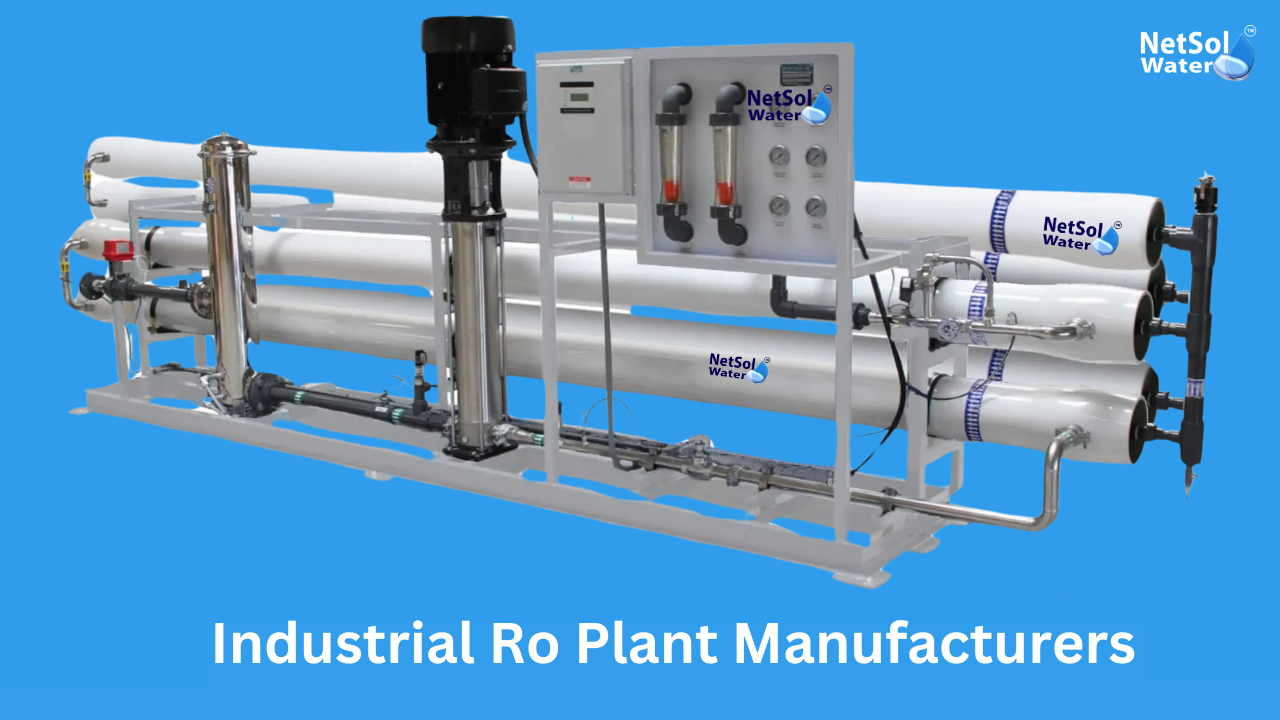
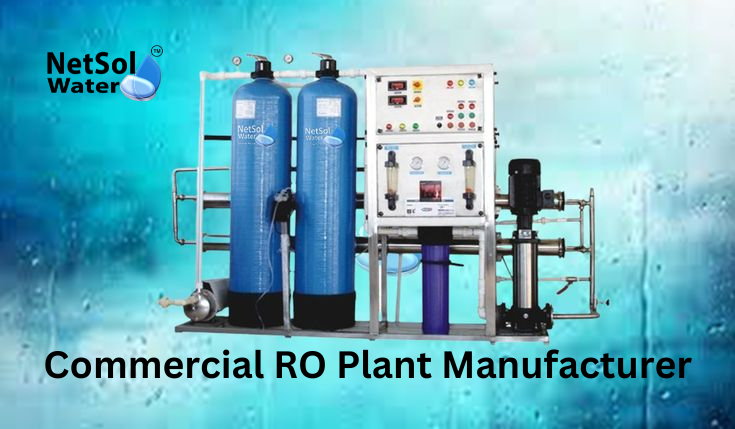
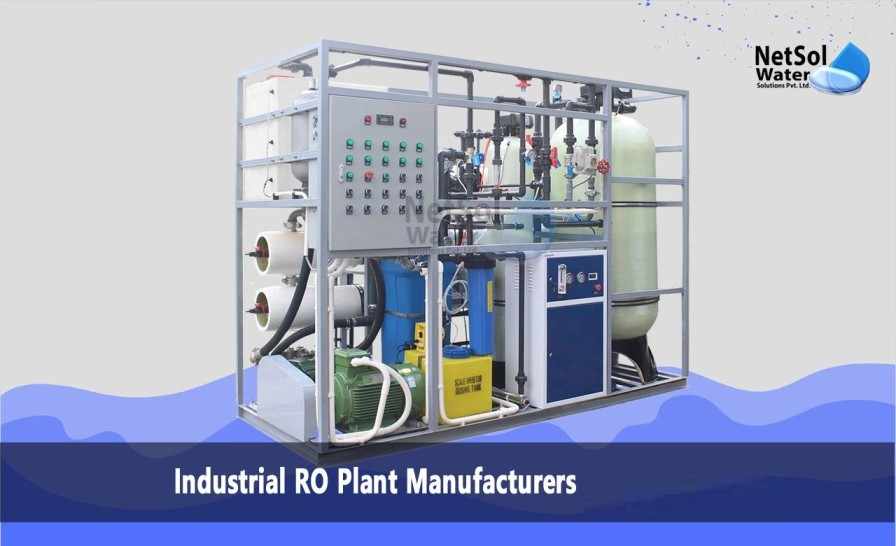
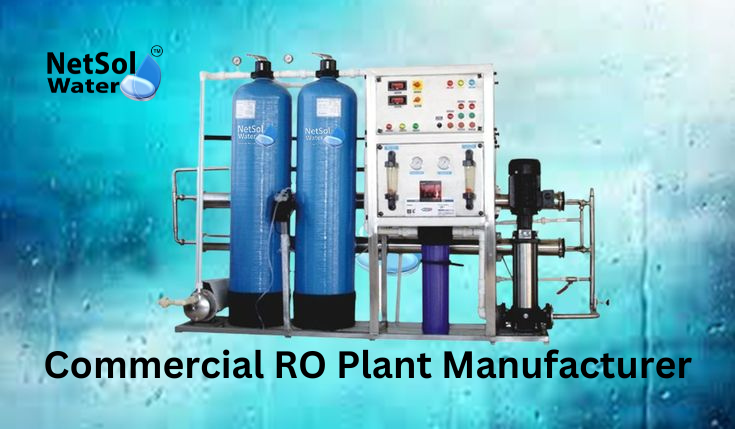
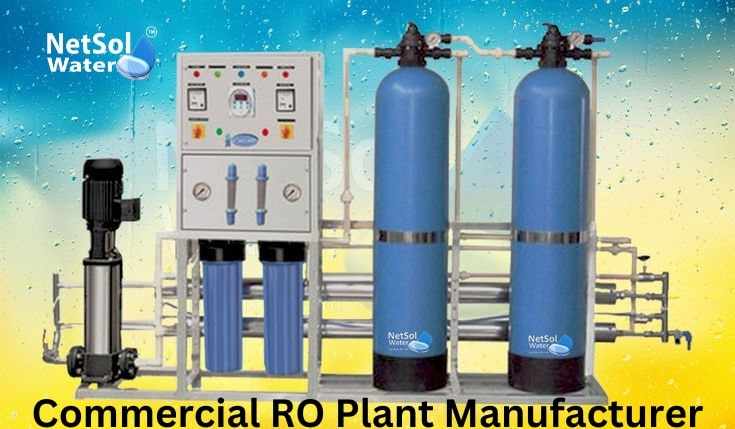
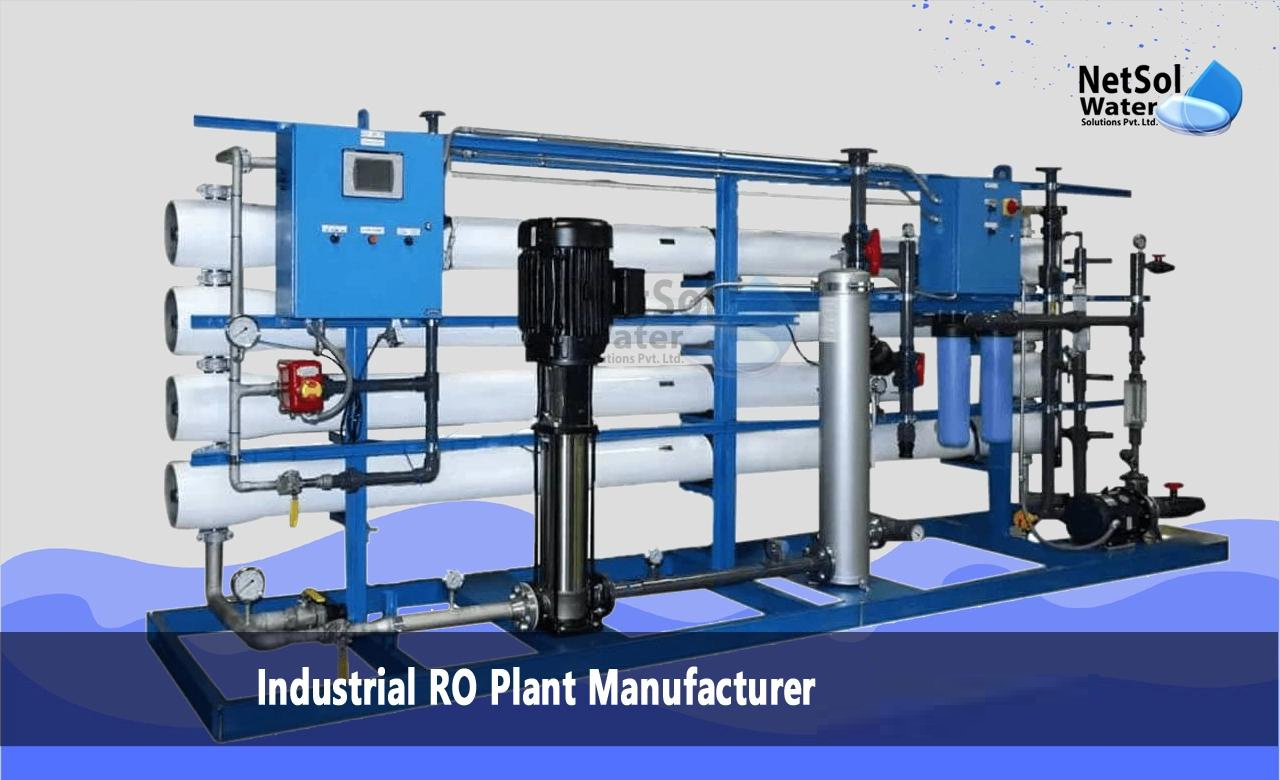
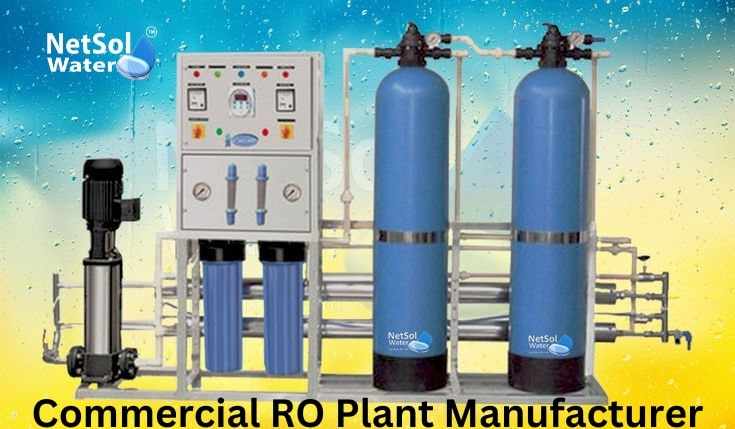
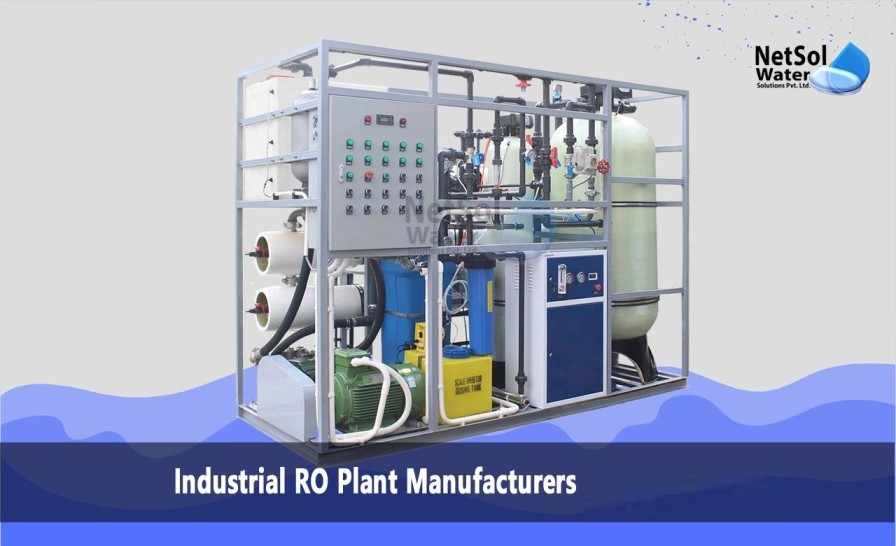
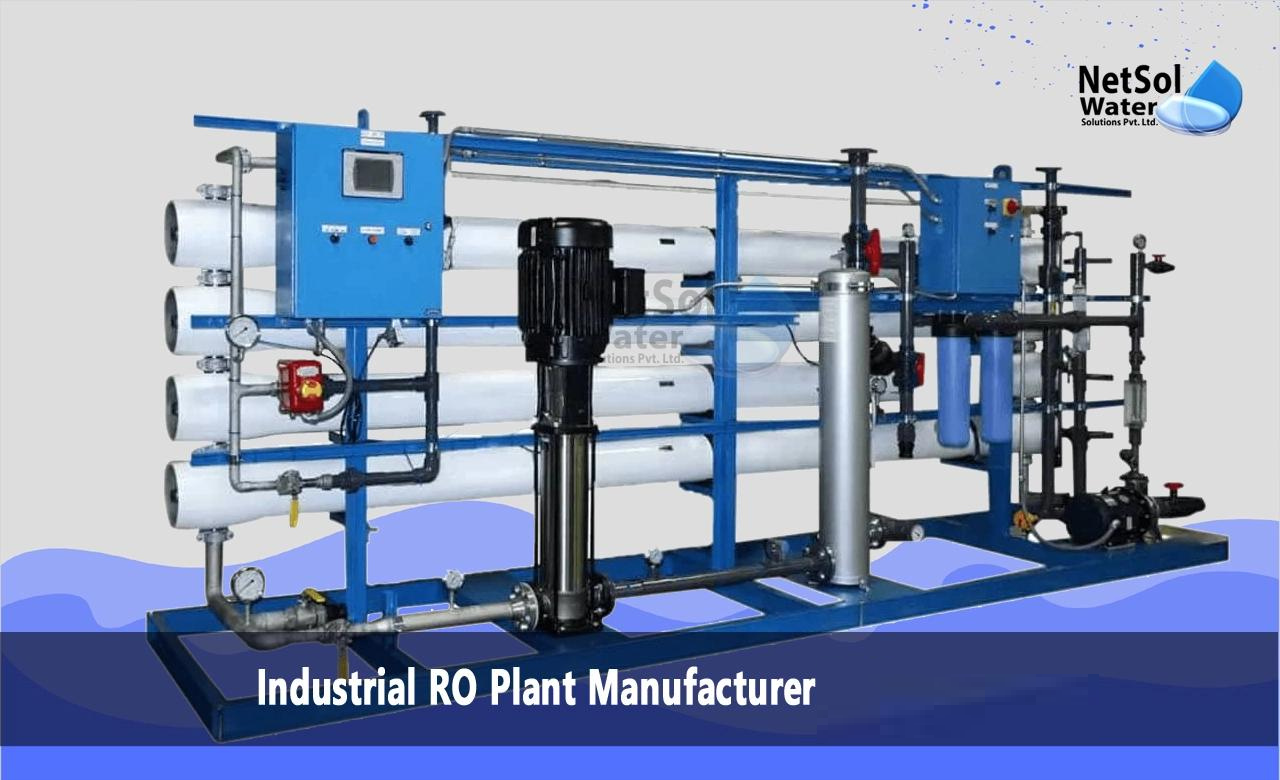
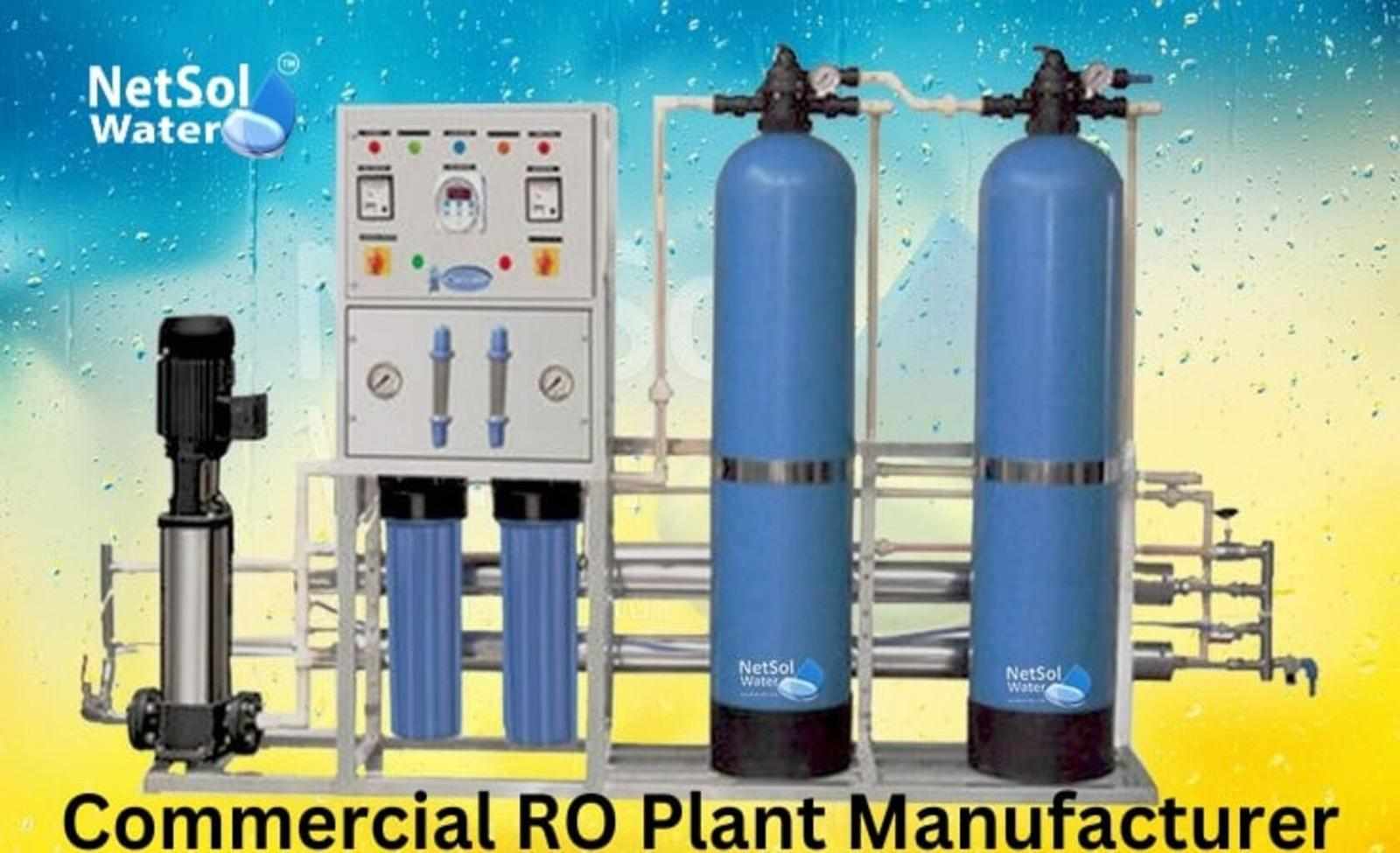
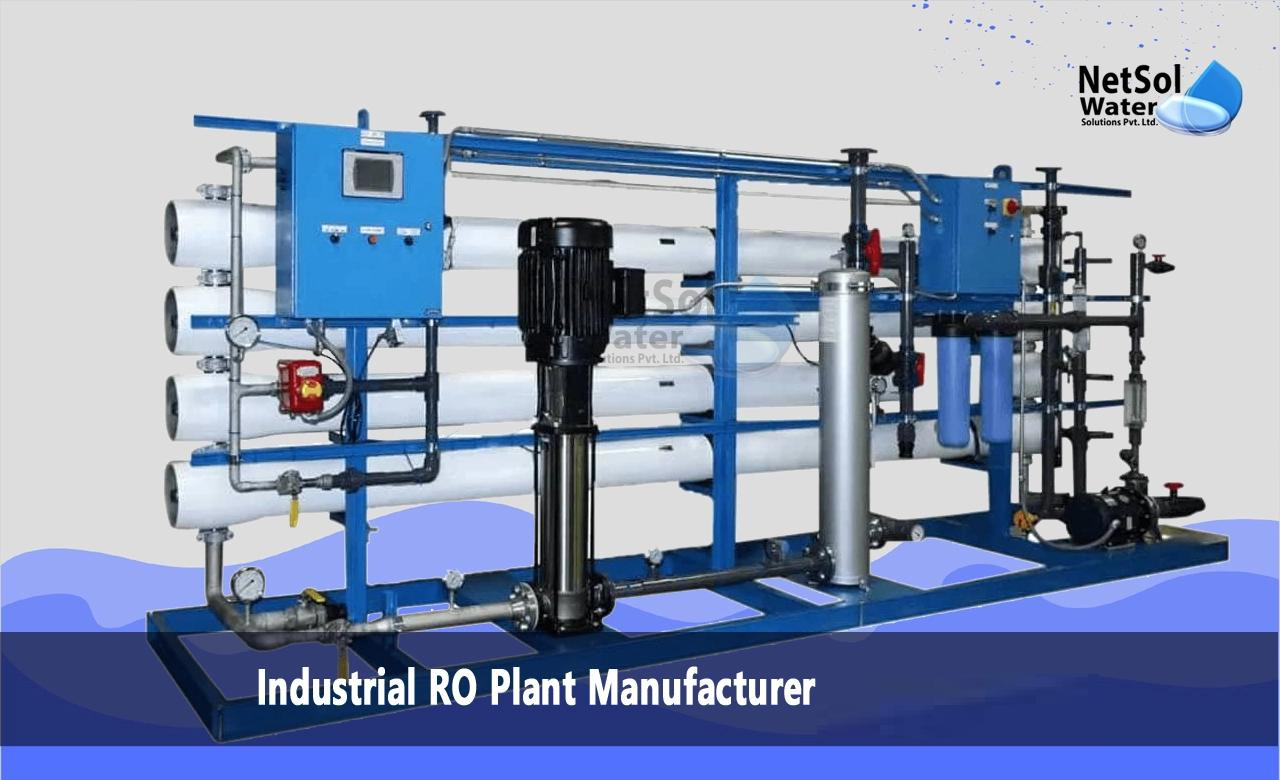
A typical industrial RO system may include:
Raw water storage tank
Feed pump
Pressure sand filter
Activated carbon filter
Water softener where required
Micron cartridge filter
Chemical dosing system
High-pressure pump
RO membrane vessels
RO membranes
Flow meters
Pressure gauges
Conductivity or TDS monitoring
Electrical control panel
Product-water tank
Reject-water management system
The final configuration depends on the feed-water analysis and the quality required at the point of use.
Why Industries in Noida Need High-Capacity RO Plants
Noida and the wider NCR region have a wide range of manufacturing and process industries. These facilities often need a reliable water supply throughout their working shifts.
For a small facility, a compact RO plant may be enough. However, larger factories can require thousands or even hundreds of thousands of litres of treated water each day.
A properly designed high-capacity RO plant can provide centralized treatment rather than forcing a business to operate multiple smaller systems.
This can make the overall water-treatment setup easier to manage.
Some important benefits include:
High-volume water production
Consistent treated-water quality
Centralized monitoring
Better membrane protection
Easier maintenance
Lower dependence on multiple small systems
Scope for future capacity expansion
Better control over water-treatment operations
Netsol Water's Noida industrial RO information describes systems for small, medium and large industrial requirements. It also mentions customized configurations for larger plants.
Industries That Use Industrial RO Plants
Industrial RO technology can support many different industries. However, the design should always match the specific application.
1. Pharmaceutical Industry
Pharmaceutical facilities often require controlled water quality for manufacturing and utility operations.
RO can act as an important treatment stage before additional purification where necessary.
Depending on the application, the complete system may include technologies such as UV, ultrafiltration, demineralization or EDI.
2. Food and Beverage Industry
Food and beverage plants use water for production, ingredient preparation, cleaning and utilities.
Water quality can affect both the process and the final product.
An industrial RO system can help reduce unwanted dissolved substances from the source water.
The manufacturer should consider hygiene requirements and the final application before selecting materials and treatment stages.
3. Textile Industry
Textile manufacturing uses significant quantities of water.
Water containing excessive hardness and dissolved minerals can interfere with dyeing and other processes.
RO-treated water can help provide more consistent water quality for suitable textile applications.
4. Chemical Industry
Chemical plants often need water with controlled chemical characteristics.
RO can reduce dissolved salts and other substances before the water enters a process.
The exact treatment configuration depends heavily on the chemicals present in the feed water.
5. Power Plants
Power facilities can require treated water for boiler-related applications and other utilities.
RO may form part of a larger water-treatment system.
Additional demineralization or polishing can be used where very low conductivity water is required.
6. Metal and Steel Industries
Metal-processing facilities can use treated water for cooling and production-related applications.
Reducing hardness and dissolved solids can help manage scaling and other water-related problems.
7. Manufacturing Units
General manufacturing plants can use industrial RO systems for process water, equipment cleaning and utility applications.
The required capacity depends on production volume and operating hours.
Netsol Water's published Noida page lists manufacturing, chemical, pharmaceutical, power, food and beverage, textile and metal industries among the sectors it serves.
How Does an Industrial RO Plant Work?
A high-capacity RO plant usually works through several stages.
Each stage has a specific purpose.
1. Raw Water Storage
The incoming water first enters a storage tank.
This tank provides a steady feed to the treatment system.
It can also help manage fluctuations in water supply.
2. Pressure Sand Filtration
The first major pretreatment stage often involves a pressure sand or multimedia filter.
It removes suspended particles and other larger physical impurities.
This reduces the load on downstream treatment equipment.
3. Activated Carbon Filtration
Activated carbon can help reduce chlorine and certain organic substances.
It also supports better taste and odour control where applicable.
More importantly, carbon filtration can protect chlorine-sensitive RO membranes.
4. Softening
If the feed water contains high hardness, a water softener may be required.
Hardness can contribute to scale formation on RO membranes.
However, softening should be selected based on the water analysis and the membrane design.
5. Micron Filtration
A micron cartridge filter provides another protective barrier.
It captures smaller particles that remain after the earlier pretreatment stages.
This helps protect the RO membrane surface.
6. Chemical Dosing
Some industrial systems require chemical dosing.
Antiscalant can help control scale formation. Other chemicals may be used depending on the feed-water characteristics.
The dosing program should come from technical calculations rather than guesswork.
7. High-Pressure Pump
The high-pressure pump supplies the pressure needed for membrane separation.
Correct pump selection is critical in a high-capacity system.
An oversized pump can waste energy. An undersized pump may not provide the required pressure.
8. RO Membrane Stage
The pressurized water enters the RO membrane vessels.
The membrane separates the water into permeate and reject.
The permeate moves towards the product-water tank while the concentrated reject stream moves towards the reject-management system.
Netsol Water's Noida industrial RO page describes RO membranes as the main treatment stage and explains that pretreatment helps protect them from suspended matter and scale-forming substances.
Why Pretreatment Is Critical for High-Capacity RO Plants
A common mistake is to focus heavily on the RO membrane while ignoring pretreatment.
In reality, membrane performance depends strongly on feed-water quality.
Poor pretreatment can result in:
Scaling
Fouling
Reduced permeate flow
Increased pressure
More frequent cleaning
Higher operating costs
Shorter membrane life
For example, high hardness can create scaling. Suspended solids can cause fouling. Chlorine can damage certain membrane types.
Therefore, a professional manufacturer should study the feed water before finalizing the treatment design.
Netsol Water's Noida industrial RO page states that its design process considers factors such as hardness, TDS, silica, iron and organic load before selecting pretreatment and membrane arrangements.
Choosing the Right Capacity for an Industrial RO Plant
Industrial RO capacity is commonly expressed in LPH or litres per hour.
Some commonly considered capacities include:
500 LPH
1,000 LPH
2,000 LPH
5,000 LPH
10,000 LPH
15,000 LPH
25,000 LPH
50,000 LPH and above
However, capacity selection should not depend only on the daily water requirement.
Engineers should consider:
Daily water consumption
Peak demand
Number of operating shifts
Operating hours
Raw-water availability
Product-water storage
Required recovery
Feed-water quality
Future expansion
For example, a factory may need 100,000 litres of treated water every day. If the RO operates for 10 hours daily, the required production rate would be different from a system that operates for 20 hours.
Therefore, capacity should be calculated according to the actual production schedule.
Small, Medium and Large Industrial RO Plants
Different industries need different capacities.
1. Small Industrial RO Plants
Systems around 500 to 1,000 LPH can suit smaller manufacturing facilities and applications with moderate water requirements.
These systems can use compact skids and relatively simple controls.
Netsol Water's Noida page identifies 500 to 1,000 LPH systems for smaller industrial applications including certain food-processing and textile operations.
2. Medium Industrial RO Plants
Systems around 2,000 to 5,000 LPH can suit medium-sized factories.
These plants can support longer operating shifts and higher process-water demand.
Automation and membrane arrangements can be upgraded according to project requirements.
3. Large Industrial RO Plants
Plants above 5,000 LPH can serve larger factories and centralized industrial utilities.
These systems may use multiple membrane trains, larger pumps and advanced automation.
Large plants also need careful planning for:
Electrical supply
Piping
Product-water storage
Reject handling
Maintenance access
Civil foundation
Operator safety
Netsol Water's published Noida page describes 10,000 LPH and 15,000 LPH configurations as options for larger factories and centralized water supplies. It also mentions customized larger systems.
Custom High-Capacity RO Plants
Not every industrial project fits a standard RO model.
Large factories may have unique feed-water conditions and process requirements.
For such projects, a customized system may be more suitable.
The design can consider:
Feed-water TDS
Hardness
Silica
Iron
Organic matter
Required permeate quality
Recovery target
Available floor space
Operating hours
Future capacity
Netsol Water states that its larger RO configurations are customized after a site survey and water analysis. The published information also mentions modular designs that can allow phased capacity expansion.
Water Testing Before Installing an Industrial RO Plant
Water testing should happen before final equipment selection.
This is one of the most important steps in RO plant design.
A typical water analysis may include:
TDS
pH
Conductivity
Total hardness
Calcium
Magnesium
Alkalinity
Chloride
Sulphate
Silica
Iron
Turbidity
Organic load
The exact parameters depend on the source and application.
Once the results are available, engineers can determine the appropriate pretreatment and membrane configuration.
This helps avoid a situation where the plant is technically capable of producing high-quality water but cannot maintain its output because the pretreatment does not match the feed water.
Industrial RO Plant with Automation
Automation becomes increasingly valuable as the plant capacity grows.
A modern RO control system can monitor:
Feed pressure
RO pressure
Permeate flow
Reject flow
Conductivity
Tank levels
Pump status
Chemical dosing
Membrane performance
System alarms
A PLC-based control system can automate several routine functions.
For example, the plant can stop automatically when the product-water tank reaches a predetermined level.
It can also provide alarms when operating conditions move outside the desired range.
However, automation does not remove the need for trained operators.
Operators should still inspect equipment and record performance data.
Energy Efficiency in High-Capacity Industrial RO Plants
Energy consumption becomes an important consideration when plant capacity increases.
The high-pressure pump is one of the major power-consuming components.
Therefore, the manufacturer should focus on correct pump sizing and membrane selection.
Energy efficiency can improve through:
Efficient high-pressure pumps
Correct membrane selection
Proper pretreatment
Optimized operating pressure
Variable-frequency drives where appropriate
High recovery design
Energy recovery devices where suitable
Regular membrane cleaning
Netsol Water's published Noida information mentions energy-efficient pumps, optimized pressure and energy-recovery options where applicable.
RO Recovery and Reject-Water Management
An RO plant does not convert every litre of feed water into product water.
Part of the feed becomes reject.
The percentage recovered as permeate is called the recovery rate.
A higher recovery can reduce raw-water consumption. However, pushing recovery too far can increase the risk of scaling and membrane fouling.
Therefore, recovery should be optimized based on the feed-water chemistry.
For high-capacity plants, reject management becomes even more important.
Possible approaches include:
Reuse for suitable applications
Additional RO treatment
Concentration
Evaporation
Recovery systems
Disposal according to applicable requirements
The right approach depends on the site's water chemistry and environmental requirements.
Industrial RO for Boiler Feed Water
Boilers require careful control of water quality.
Hardness and dissolved salts can contribute to scaling and corrosion.
RO can reduce dissolved solids before water enters additional treatment stages.
For demanding boiler applications, RO may work alongside:
Pretreatment → RO → DM/EDI → Boiler Feed
The final treatment train should depend on the boiler pressure and required feed-water quality.
Industrial RO for Food and Beverage Plants
Food and beverage facilities need reliable water for production and cleaning.
Water quality can affect product consistency and process performance.
RO can help reduce unwanted dissolved substances from the source water.
However, food-related installations may also require attention to:
Material selection
Hygiene
Cleaning procedures
Storage
Microbial control
Final water-quality requirements
Therefore, the RO plant should be designed around the complete process rather than simply the required LPH.
Industrial RO for Pharmaceutical Facilities
Pharmaceutical applications can demand tighter water-quality control.
RO may serve as one stage of a multi-step purification system.
Depending on the application, the treatment train could include:
Raw Water → Pretreatment → RO → UV → EDI/DM → Final Polishing
The final configuration should follow the site's water-quality specification and applicable standards.
Industrial RO for Textile Industries
Textile operations often use large amounts of process water.
High hardness and dissolved minerals can create difficulties in dyeing and finishing processes.
RO-treated water can provide more consistent quality where low-mineral water is required.
The system should be designed according to the process chemistry and required production volume.
Industrial RO for Chemical Industries
Chemical manufacturing can involve challenging water conditions.
The feed water may contain dissolved salts or other compounds that interfere with production.
An industrial RO system can reduce suitable contaminants before the water reaches the process.
However, water analysis becomes especially important for chemical applications because membrane compatibility depends on the feed-water composition.
RO as Part of a Water-Reuse System
Industrial RO does not have to be limited to fresh-water treatment.
It can also become part of a wastewater-recycling system.
For example:
ETP → Filtration → RO → Reuse
This approach can help industries recover usable water from treated wastewater.
It can reduce dependence on fresh-water sources and may also reduce wastewater discharge.
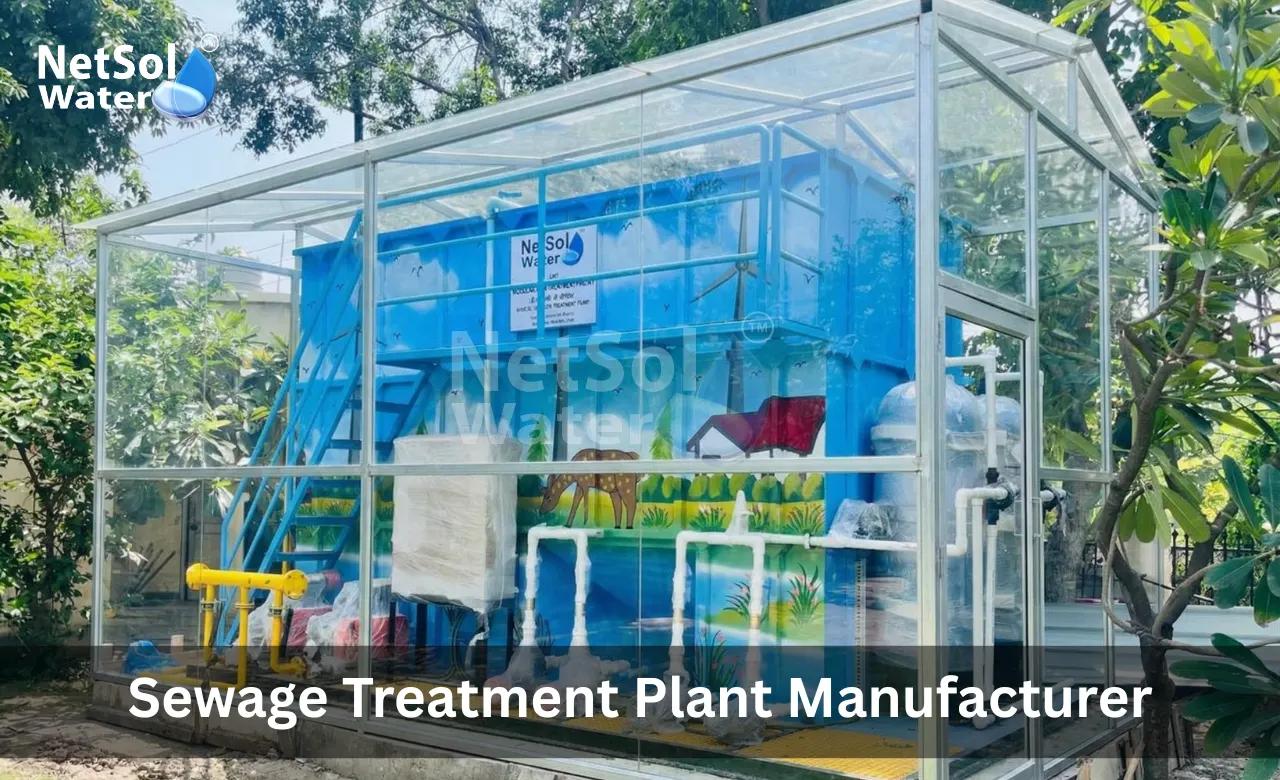
Netsol Water's broader portfolio includes industrial RO alongside ETP, STP and other wastewater-treatment technologies.
For facilities with high water demand, combining treatment and recycling can provide a more complete water-management strategy.
Industrial RO Plant Installation Process
A successful project should include proper planning from beginning to end.
1. Site Survey
Engineers evaluate available space, water connections, electrical supply and drainage.
2. Water Analysis
The raw-water sample is tested.
3. Capacity Calculation
The manufacturer calculates the required plant capacity.
4. Process Design
Pretreatment, membrane stages and post-treatment are finalized.
5. Equipment Selection
Pumps, membranes, vessels, filters and controls are selected.
6. Fabrication
The RO skid and related equipment are assembled.
7. Installation
Mechanical and electrical connections are completed at the site.
8. Commissioning
The system is started and operating parameters are adjusted.
9. Performance Testing
The manufacturer checks production and water-quality parameters.
10. Operator Training
Site staff receive instructions for daily operation and basic troubleshooting.
Netsol Water's published Noida information describes design, fabrication, installation, commissioning and operator training as part of its industrial RO service approach.
Maintenance of High-Capacity Industrial RO Plants
Installing an industrial RO plant is only the beginning.
Regular maintenance helps maintain performance.
Operators should monitor:
Feed pressure
Permeate pressure
Reject pressure
Permeate flow
Reject flow
Product-water TDS
Conductivity
Recovery
Pump performance
Filter condition
They should also maintain daily operating records.
A sudden drop in permeate flow may indicate fouling or scaling.
An increase in product-water TDS may indicate membrane deterioration or another operating problem.
Early detection can help prevent expensive downtime.
Membrane Cleaning
RO membranes naturally accumulate deposits over time.
Depending on the feed-water quality, these deposits may include:
Scale
Suspended solids
Organic matter
Biological growth
Chemical cleaning can restore membrane performance when normal flushing is not sufficient.
However, cleaning should follow the membrane manufacturer's recommendations.
Using the wrong chemical or incorrect concentration can damage the membrane.
Therefore, operators should maintain proper cleaning records and follow an established cleaning schedule.
Why Choose an Industrial RO Plant Manufacturer in Noida?
Selecting a local or NCR-based industrial RO plant manufacturer can provide practical advantages.
A manufacturer with experience in the Noida industrial environment may understand common project requirements and installation conditions.
More importantly, the manufacturer should provide complete technical support.
Look for:
1. Engineering Experience
The company should understand industrial water-treatment requirements.
2. Water Analysis
The manufacturer should design the plant after reviewing feed-water data.
3. Customized Solutions
Large industrial projects often need customized configurations.
4. Quality Components
Membranes, pumps, pressure vessels and control systems should be selected carefully.
5. Installation Support
The manufacturer should manage commissioning and performance checks.
6. Operator Training
The facility's team should know how to operate the system safely.
7. After-Sales Service
Technical support is essential for a large RO plant.
8. AMC and Spare Parts
Preventive maintenance and readily available spares can reduce downtime.
Why Consider Netsol Water for Industrial RO Plants in Noida?
Netsol Water's published Noida industrial RO information presents systems for small, medium and large industrial applications. It describes capacities including 500 LPH, 1,000 LPH, 2,000 LPH, 5,000 LPH, 10,000 LPH and 15,000 LPH along with customized larger configurations.
The company also describes a design approach based on site surveys and feed-water testing. Its published information discusses pretreatment, membrane selection, pump sizing, automation and recovery as part of the engineering process.
Its wider industrial RO material states that the company supplies systems for water, saline-water and seawater applications and lists capacities ranging from smaller units to systems of up to 100 m³ per hour.
For an industrial buyer, the important point is not simply the number of available models. The manufacturer should be able to select and customize the treatment system according to the actual project requirements.
Industrial RO Plant Cost in Noida
The cost of an industrial RO plant can vary significantly.
Several factors influence the final project price:
Plant capacity
Feed-water TDS
Hardness
Silica
Iron
Organic load
Pretreatment requirements
Membrane type
Number of membrane vessels
Pump capacity
Automation
Material of construction
Storage tanks
Installation
Piping
Electrical work
Reject-water management
Additional treatment stages
Therefore, it is difficult to give a meaningful price without understanding the project.
Businesses should also calculate lifecycle cost rather than focusing only on purchase price.
Lifecycle expenses can include:
Capital cost + electricity + chemicals + membrane replacement + filter replacement + maintenance + downtime.
A slightly higher-quality system can sometimes offer better long-term value through reliable operation and lower maintenance requirements.
Common Mistakes When Buying an Industrial RO Plant
Businesses can avoid many problems by planning carefully.
1. Selecting Capacity Without a Water Study
Do not select the RO capacity only because another factory uses the same model.
2. Ignoring Pretreatment
Membrane performance depends heavily on feed-water quality.
3. Focusing Only on Initial Cost
A low purchase price does not automatically mean low operating cost.
4. Ignoring Reject Management
High-capacity RO plants can generate large reject volumes.
5. Choosing Poor-Quality Components
A pump or membrane failure can affect the entire production process.
6. Forgetting Future Expansion
Factories often increase production over time.
The RO design should consider future requirements where practical.
7. Neglecting Maintenance
Even the best RO plant needs regular inspection and cleaning.
Questions to Ask Before Buying an Industrial RO Plant
Before finalizing your manufacturer, ask these questions:
1. What capacity do we actually need?
The manufacturer should calculate capacity based on water demand and operating hours.
2. What is the required product-water quality?
The RO system should be designed around the actual end use.
3. What pretreatment will be required?
Each pretreatment stage should have a clear technical reason.
4. What recovery can the plant achieve?
Recovery should be realistic for the feed-water chemistry.
5. What membrane technology will be used?
Ask about membrane specifications and expected operating conditions.
6. What will the power consumption be?
This helps estimate long-term operating costs.
7. How will reject water be managed?
A reject-management strategy should be established before installation.
8. What maintenance will the plant require?
Ask about membrane cleaning, filters, pumps and routine inspections.
9. Is AMC available?
An Annual Maintenance Contract can provide regular technical support.
10. What happens if the plant stops?
Ask about response times, spare parts and troubleshooting support.
Complete Industrial RO Solutions for Noida
A high-capacity RO plant should be viewed as part of the complete industrial water-management system.
The process should start with water analysis.
Next, engineers should calculate the actual demand.
Then they can select pretreatment and membrane configurations.
After that, the manufacturer can fabricate and install the plant.
Finally, operators should monitor the system and follow a preventive-maintenance schedule.
For industries that generate wastewater, the RO system can also work with ETP and recycling systems.
For example:
Raw Water → Pretreatment → RO → Process
or:
ETP → Filtration → RO → Reuse
This approach can help businesses look at water as a resource rather than treating it as a one-time input.
Netsol Water's wider water-treatment portfolio covers industrial RO along with sewage and effluent treatment solutions.
Conclusion
Industrial facilities in Noida need dependable water for production and utility operations. As factories become larger, their water requirements also increase. At the same time, untreated or poorly treated water can create scaling, corrosion and process-quality problems.
A properly engineered Industrial RO Plant in Noida can help address these challenges.
However, choosing the right plant requires more than selecting a high LPH number. The manufacturer should understand the feed-water quality, required product-water quality, operating hours, recovery target and future requirements.
Pretreatment should receive equal attention. Sand filtration, activated carbon, softening and micron filtration can protect the RO membranes when selected according to actual water conditions.
High-capacity plants can also benefit from automation, efficient pumps and appropriate recovery strategies. At the same time, reject-water management should form part of the original project design.
When choosing an Industrial RO Plant Manufacturer in Noida, look for engineering experience, customized design, reliable components, installation support and long-term maintenance service.
Netsol Water's published Noida industrial RO information describes customized systems across multiple capacity ranges and explains its approach around water analysis, pretreatment, membrane selection, automation and maintenance.
Ultimately, the best industrial RO plant is not simply the largest or cheapest system.
It is the system designed around your water, your process and your actual production requirements.
With the right engineering and regular maintenance, a high-capacity industrial RO plant can become a dependable part of a factory's water-management strategy while helping improve process consistency, equipment protection and long-term operational efficiency.

Write a comment ...